
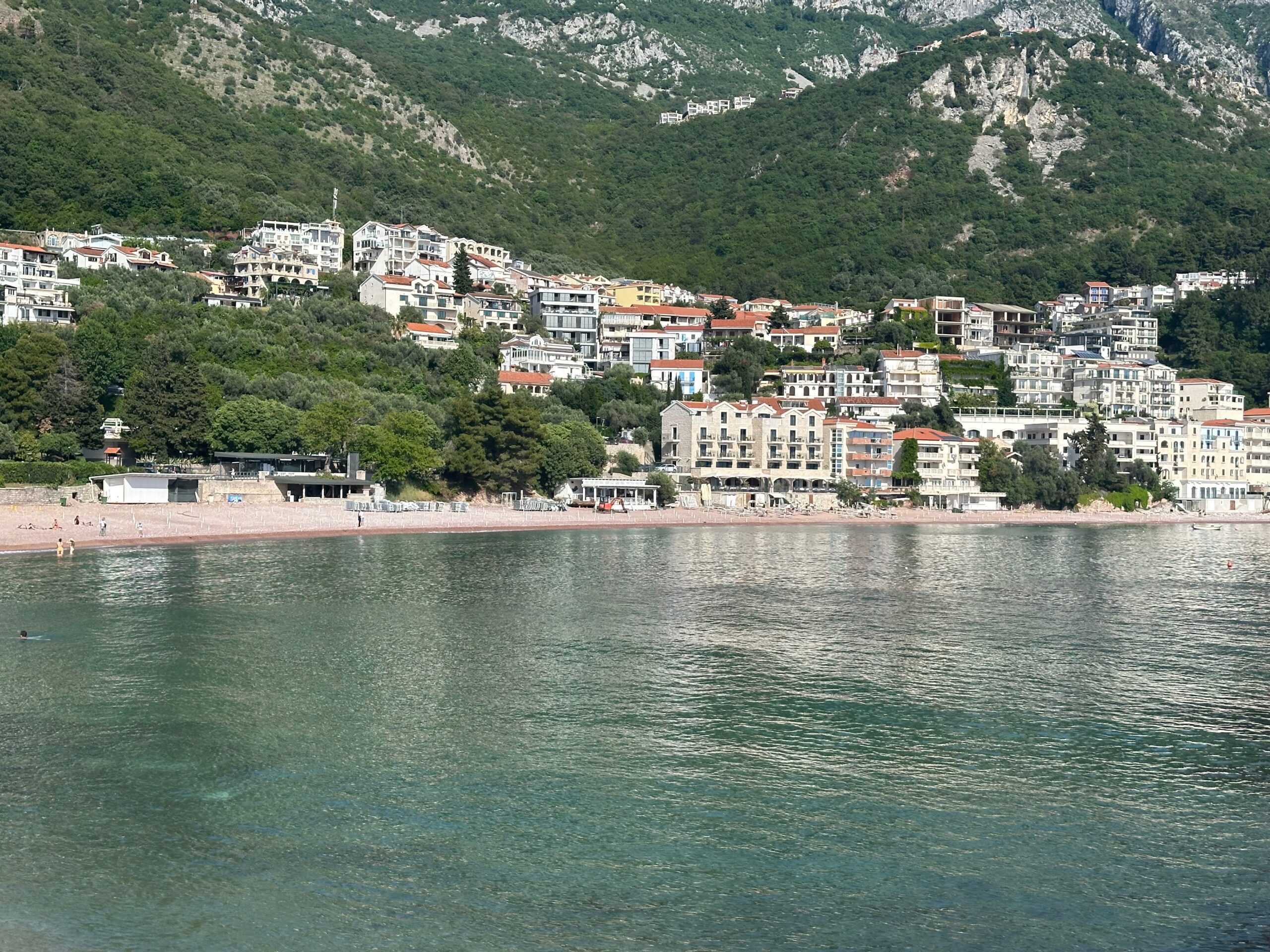
Montenegro Property Prices 2026: Avg. €/m² by Region

Thinking about buying a place in Montenegro? You’re not alone. The country has become a popular spot for both investment and lifestyle, thanks to its mix of coastal towns, mountain escapes, and a growing international community. I bought my first apartment in Montenegro back in 2024. You can read about my experience buying the apartment and about the renovation that followed.
You’ll see big differences in prices depending on location. Coastal cities like Budva, Kotor, and Tivat often come with higher price tags, while inland towns and mountain regions remain much more affordable. This means you can choose between a central city apartment, a seaside rental property, or even a quiet mountain retreat, depending on your goals.
Also check out my guide on how to buy property in Montenegro as a foreigner and my Montenegro real estate market guide.

Plan Your Property Investment
With My Trusted Resources
– Make money transfers for less with: Wise
– Book your flights and hotels: Trip.com
Booking.com
– Book your airport transfers here: Kiwitaxi
– Rent cars here: DiscoverCars & LocalRent
– Hire affordable shipping services here: Eurosender
Table of Contents
Overview of Property Prices in Montenegro
Property prices in Montenegro vary a lot depending on where you look. Coastal towns are the most expensive, while inland and central regions remain much more affordable. Growth has been strong in recent years, but experts expect things to cool slightly in 2026.
Are Montenegro Properties Expensive?
If you’re looking at coastal areas like Budva, Kotor, or Tivat, then yes—properties here are considered expensive. Apartments in these towns often cost between €2,700 and €5,000 per square meter, and luxury developments in Porto Montenegro or Luštica Bay can even exceed €10,000 per square meter.
Inland areas, however, are much cheaper. For example, in the central region you can find homes for €700 to €1,050 per square meter, which is a fraction of coastal prices. Podgorica, the capital, falls in the middle at around €1,500 to €2,250 per square meter.
So whether real estate in Montenegro feels expensive depends on where you buy. Coastal buyers pay a premium for location and tourism demand, while inland buyers get far more space for their money.
👉 I’ve used Moneycorp for overseas transfers—here’s exactly how it works and how you can save on fees.
Check out my Resources page for more useful products and services when moving and buying property abroad.

What are the Current Average Prices per Square Meter (by Region)?
The price difference between regions is clear. Coastal hotspots dominate the high end, while central and mountain areas remain budget-friendly.
| Region / City | Price Range (€/m²) | Notes |
|---|---|---|
| Porto Montenegro, Luštica Bay | €5,000–€14,000+ | Ultra-luxury, exclusive |
| Budva, Kotor, Tivat | €2,700–€5,000 | Prime coastal, strong rentals |
| Petrovac, Herceg Novi | €2,000–€3,500 | Mid-range coastal |
| Podgorica | €1,520–€2,250 | Capital city, steady demand |
| Bar, Ulcinj | €1,100–€2,500 | Budget coastal |
| Kolašin, Žabljak | €1,200–€1,400 | Mountain areas |
| Central Region towns | €700–€1,050 | Lowest prices |
This breakdown shows how much location affects what you’ll pay. Coastal towns are driven by tourism and foreign buyers, while inland areas attract budget-conscious buyers. You can explore more details in this Montenegro property price guide.

How Have Property Prices Changed in the Past 6 Months?
Property prices in Montenegro have experienced strong increases in 2024 and 2025 with a year-on-year increase of around 20% across the country. These surges have been higher than 40% in coastal areas. Towards the end of 2025, the price growths have slowed down slightly but remain positive. This recent slowdown suggests the market is stabilizing after several years of rapid appreciation.
What is the Forecast for 2026?
After 2 years of sharp increases, most experts expect the property prices in Montenegro to stabilize in 2026. Local real estate agents foresee a price appreciation slow to below 7% for coastal areas like Budva, Kotor, and Tivat, and below 5% for the capital Podgorica and the central towns.
Based on seasonal patterns, I would predict the first quarter of 2026 to see only slight property price increases. Renewed buyer activity in the spring and summer seasons will bring those percentages up again.
If Montenegro moves closer to European Union membership, demand could rise further. For now, expect steady but not explosive growth.

Types of Properties and Their Price Ranges
Property prices in Montenegro depend not only on the location, but also on the type of home you buy.
✅ Apartments: Budget to Luxury
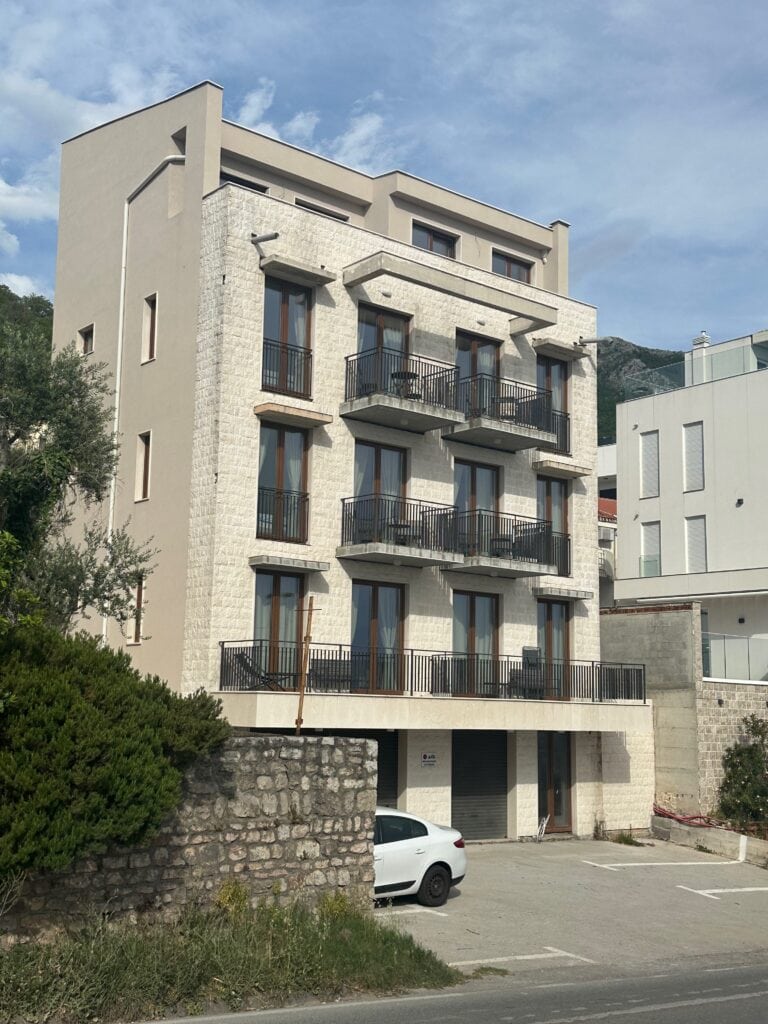
Apartments make up the largest part of the real estate market. If you want something simple inland, you’ll usually find prices between €700 and €1,400 per m². These are common in central towns and mountain areas.
On the coast, prices climb. Standard apartments in places like Bar or Ulcinj range from €1,100 to €2,500 per m². These are good entry-level options if you want to be near the sea without paying premium prices.
In prime coastal areas such as apartments in Budva, Kotor, and Tivat, expect €2,700 to €5,000 per m². These apartments attract tourists, so they work well for short-term rentals.
At the very top, luxury developments in Porto Montenegro and Luštica Bay reach €5,000 to €14,000+ per m². These are high-end waterfront apartments with exclusive amenities.
✅ Houses and Villas
Houses and villas are popular if you want more space or privacy. Inland homes in central regions often cost €700 to €1,050 per m², making them some of the most affordable residential options.
Coastal houses in mid-range towns like Herceg Novi or Petrovac usually fall between €2,000 and €3,500 per m². These areas balance lifestyle and investment potential.
Premium villas in Budva or Kotor can reach €3,000 to €5,000 per m², especially if they have sea views or modern finishes. Luxury villas in Porto Montenegro or Sveti Stefan can go well beyond €10,000 per m², putting them in the same category as top European resort properties.
✅ Townhouses and Cottages
Townhouses and traditional cottages are less common but still available, especially in older towns and mountain regions. In the central inland areas, cottages can be found for under €1,200 per m², making them one of the most budget-friendly options.
Stone cottages in historic places like Kotor or Herceg Novi often cost more because of their character and location. Prices usually range from €2,000 to €3,500 per m² depending on condition and proximity to the coast.
Mountain cottages in Kolašin and Žabljak average €1,200 to €1,400 per m². These properties are popular with eco-tourism buyers or anyone interested in winter sports and seasonal rentals.
How Do Prices Compare in Other Neighboring Countries?
If you’re looking at Montenegro, it helps to see how prices stack up against nearby countries. Each market has its own trends, and the costs can vary a lot depending on location. See how Montenegro compares with my other destinations on my property prices page.
In Croatia, property along the Adriatic coast is usually higher than in Montenegro. Popular spots like Dubrovnik or Split often exceed €3,000 per m², making them more expensive than most Montenegrin coastal towns.
Albania tends to be cheaper. Cities like Tirana and coastal areas such as Durrës often range from €1,000–€1,500 per m², which is below Montenegro’s prime coastal rates. This makes Albania one of the more affordable options in the region.
Serbia offers lower prices in general, especially outside Belgrade. In the capital, you might see €1,500–€2,500 per m², but smaller cities are far less. That’s closer to Montenegro’s inland or central regions.
Bosnia and Herzegovina has some of the lowest prices among Montenegro’s neighbors. Even in Sarajevo, averages hover around €1,000–€1,500 per m², and smaller towns can be much cheaper.
Here’s a quick comparison:
| Country | Typical Price Range (€/m²) | Notes |
|---|---|---|
| Montenegro | €700–€5,000+ | Coastal areas much higher |
| Croatia | €2,000–€4,000+ | Coastline drives prices up |
| Albania | €1,000–€1,500 | More affordable on the coast |
| Serbia | €1,000–€2,500 | Belgrade highest, others lower, has no coast |
| Bosnia & Herzegovina | €800–€1,500 | Among the cheapest in Balkans |
Key Property Hotspots Along the Coast
Montenegro’s coast has very different markets depending on where you look. Some areas draw buyers with historic charm and UNESCO protection, while others focus on nightlife, resorts, or more affordable seaside living.
📍Bay of Kotor: Kotor, Tivat, and Herceg Novi
The Bay of Kotor is one of the most desirable places to buy. In Kotor, you’ll find stone houses inside the medieval walls and hillside villas with views of the bay. Prices are higher here, but the demand remains strong because of limited supply and the UNESCO status.
Tivat has a different feel. It’s home to Porto Montenegro, a luxury marina development that attracts yacht owners and high-end investors. Apartments here often cost more per square meter than in other towns. Rental yields are strong thanks to tourism and long-term expat demand.
Herceg Novi sits closer to the Croatian border and offers a more relaxed pace. It has a mix of old town charm and newer developments. Property here is usually more affordable than in Kotor or Tivat, making it appealing if you want bay views without the highest prices.
📍Budva Riviera: Budva, Bečići, and Sveti Stefan
The Budva Riviera is the country’s busiest stretch of coast. Budva is known for nightlife, beaches, and modern apartments. If you want strong rental income, this is one of the top spots since tourists flock here every summer.

Bečići offers long sandy beaches and more resort-style living. You’ll find larger apartment complexes and hotels, which makes it popular with families and investors interested in short-term rentals. Prices are slightly lower than in Budva but still above inland averages.
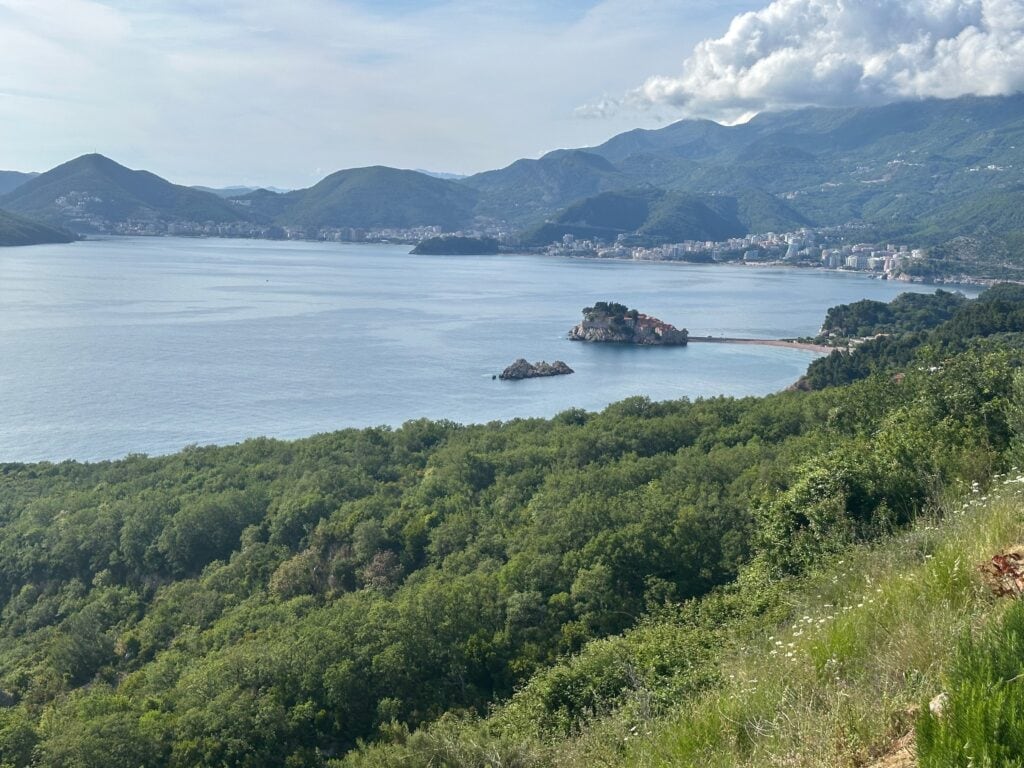
Sveti Stefan is the luxury end of the Riviera. The famous island hotel dominates the view, and villas nearby command premium prices. If you’re looking for exclusivity and are willing to pay for it, this area is where you’ll find some of the most expensive coastal homes in Montenegro.

📍Bar Riviera: Bar, Sutomore, and Dobra Voda
The Bar Riviera is more affordable compared to Budva or the Bay of Kotor. Bar is a working port city with modern apartments and a growing expat community. Prices here are lower, and you’ll find more year-round residents instead of just seasonal visitors.
Sutomore is popular with local buyers and offers a lively summer scene. It has smaller apartments and houses at entry-level prices, making it attractive if you’re on a tighter budget.
Dobra Voda is quieter and known for its beaches and holiday vibe. You’ll see small villas and apartments, often rented out during summer. Staying at a hotel in Dobra Voda is common for tourists, but many later look for property to buy after experiencing the area.
Luxury Real Estate and Prime Developments
If you’re looking at property in Montenegro, the most sought-after areas sit along the coast. Prices are highest where luxury marinas, branded resorts, and exclusive villas have transformed small towns into international destinations. These developments attract wealthy buyers and set the tone for the country’s high-end market.
🇲🇪 Porto Montenegro
Porto Montenegro in Tivat is one of the most established luxury projects in the country. Built on a former naval base, it has become a hub for yacht owners and international investors. You’ll find a mix of high-end apartments, designer shops, and a five-star Regent hotel.
Apartments with sea views here can cost €14,000+ per square meter, while non-frontline units are closer to €8,000 per square meter. The marina has berths for everything from small sailboats to superyachts, which makes it especially attractive if you’re into boating.
The area also offers year-round services, international schools, and direct flights from Tivat Airport. This makes it easier if you want to live here full-time rather than just visit in the summer.
🇲🇪 Luštica Bay
Luštica Bay is a large-scale project near Tivat, developed as a joint venture with the Montenegrin government. It’s planned as a full community with apartments, villas, hotels, golf, marinas, and even medical services. The investment is over €1 billion, making it one of the biggest in the country.
Prices range from €6,000 to €15,000 per square meter, depending on location and views. The resort already features the five-star Chedi hotel and an 18-hole Gary Player golf course.
You’ll notice the focus here is on long-term living rather than just seasonal tourism. Facilities like schools and year-round shops make it appealing if you want a permanent base.
Exclusive Villas and High-End Apartments
Beyond the branded resorts, Montenegro also has standalone luxury villas and apartments in places like Budva, Kotor, and Sveti Stefan. These properties often come with private pools, sea views, and direct beach access.
In Budva and Kotor, standard upscale homes usually cost between €2,000 and €4,000 per square meter, while ultra-luxury villas near Sveti Stefan can reach much higher. Some villas list for several million euros, especially those with large plots or historic architecture.
If you prefer privacy over resort living, these homes give you more space and independence. You can explore listings of exclusive Montenegro villas to get a sense of what’s available.
Affordable and Emerging Areas
You can find lower property prices in Montenegro if you look beyond the most famous coastal towns. Some coastal spots still offer value, while inland areas give you even cheaper options with more space for the money.
🇲🇪 Petrovac and Its Surroundings
Petrovac sits on the Budva Riviera but feels quieter than Budva itself. You get access to beaches and restaurants, but the pace is calmer and family-friendly. Prices here are lower than in Budva or Kotor, yet you stay close to the main tourist routes.
Apartments in Petrovac usually range between €1,700–3,500 per sq.m depending on distance from the sea and quality of construction. That makes it more affordable than Budva, where top apartments can go much higher.
If you look just outside Petrovac, in nearby villages, you can find houses with land for less than coastal averages. This mix of sea access and lower cost makes the area attractive if you want balance between price and lifestyle.
🇲🇪 Dobra Voda and Sutomore
Dobra Voda and Sutomore are both on the Bar Riviera, which tends to be cheaper than the Bay of Kotor or Budva Riviera. These towns give you coastal living without the heavy tourist crowds.
In Dobra Voda, a 150 sq.m house with a sea view might cost around €150,000–200,000 according to recent listings. That’s far less than similar properties in Sveti Stefan or Kotor.
Sutomore is known for its long beach and affordable apartments. Prices here often start at about €1,400 per sq.m, which makes it one of the most budget-friendly coastal spots. You sacrifice some of the luxury feel, but you get solid rental potential in summer.
🇲🇪 Inland and Rural Montenegro
If you move inland, property costs drop even further. Cities like Nikšić and Podgorica have lower prices than the coast, and rural villages offer some of the cheapest real estate in the country.
You might find small homes or farmhouses starting from €60,000 in less touristy areas. These properties often come with more land, which gives you room for gardens or small-scale farming.
The trade-off is distance from beaches and slower growth in property values. Still, if your goal is affordable living space or long-term residence, inland Montenegro offers some of the most practical deals.
What Taxes and Fees are Due when Buying Property in Montenegro?
When you buy property in Montenegro, you’ll need to budget for more than just the purchase price. The biggest costs include transfer taxes, legal and notary fees, and smaller charges like translation and registration. After purchase, you’ll also face annual property tax and possible rental income tax if you rent it out.
Taxes and Fees at Property Purchase
The largest one-time cost is the property transfer tax. For resale properties, this is progressive:
- Up to €150,000 → 3% of value
- €150,000–€500,000 → €4,500 + 5% of the amount above €150,000
- Over €500,000 → €22,000 + 6% of the amount above €500,000
For new builds, you don’t pay transfer tax but instead pay 21% VAT, which is usually included in the developer’s price.
You’ll also need to hire a lawyer, which normally costs €1,200–€3,000 depending on the complexity of the deal. Notary fees are regulated and usually range from €350 upward, with a cap at €5,000.
Other small but required expenses include:
- Translation services: around €120 for contracts
- Registration fees: about 0.5% of cadastral value
- Bank transfer costs: 0.25–1% of the transfer amount
Altogether, expect about 4–5% of the purchase price in added costs.
Taxes ans Fees after Property Purchase
Once you own the property, the main recurring cost is the annual property tax. Rates usually range from 0.25% to 1% of the market value, though some categories can reach higher. For a €200,000 property, that means about €500–€2,000 per year. Coastal properties often fall on the higher side.
If you rent out your property, Montenegro charges a 15% rental income tax. You can either deduct actual expenses or claim a flat 30% deduction against gross rental income.
When you sell, you may face a 15% capital gains tax, but exemptions apply for primary residences and transfers between close family members. Renovation costs and acquisition expenses can also reduce the taxable gain.
Conclusion: Property Prices in Montenegro
When you look at Montenegro’s property market, you notice that prices change a lot depending on where you want to buy. Coastal towns like Budva, Kotor, and Tivat are more expensive than inland areas.
If you’re considering the coast, expect higher costs. For example, apartments in the Budva Riviera range from €1,700–3,500 per sq. m, while luxury options can reach €6,000 per sq. m or more. In Kotor, villas can even climb to €7,000 per sq. m.
Here’s a quick recap of the average price ranges:
| Location | Apartments (€ per sq. m) | Houses (€ per sq. m) | Villas (€ per sq. m) |
|---|---|---|---|
| Budva Riviera | 1,700 – 3,500 | 3,000 – 8,000 | 3,500 – 10,000 |
| Bar Riviera | 1,400 – 3,000 | 1,200 – 3,000 | 2,000 – 3,500 |
| Kotor | 2,000 – 3,500 | 2,500 – 3,000 | 4,000 – 7,000 |
You also need to think about extra costs. Transaction fees, taxes, and notary expenses usually add 4-5% of the purchase price.
If you prefer something quieter and cheaper, smaller coastal towns like Sutomore or Dobrá Voda may fit better. A 150 sq. m house with a sea view can cost around €150,000–200,000.
Your choice will depend on whether you want a busy tourist hub, a luxury retreat, or a calm spot with lower prices. Owning property can also get you residency in Montenegro.




For everything else on buying and living in Montenegro in one place, check out my complete Montenegro Property & Relocation Guide.
