

5 Main Reasons Why to Invest in Property Abroad

Investing in property abroad offers you numerous advantages and benefits that can enhance your financial portfolio and lifestyle. I have compiled a list of the 5 main reasons that led me to start buying property in different countries.

Plan Your Property Investment
With My Trusted Resources
– Make money transfers for less with: Wise
– Book your flights and hotels: Trip.com
Booking.com
– Book your airport transfers here: Kiwitaxi
– Rent cars here: DiscoverCars & LocalRent
– Hire affordable shipping services here: Eurosender
Table of Contents
Infographic: 5 Main Reasons Why to Invest in Property Abroad
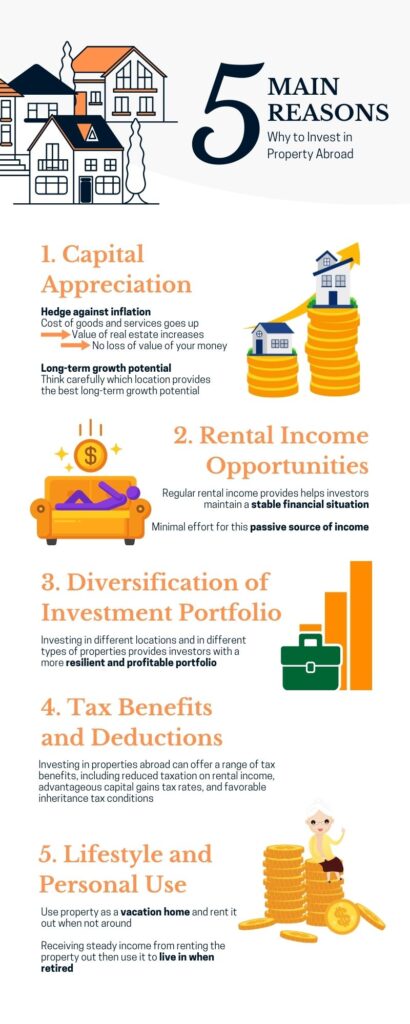
1. Potential for Capital Appreciation
Investing in property abroad can be a great way to see your investment grow. Key factors include hedging against inflation and the potential for long-term growth.
Hedge Against Inflation
Investing in overseas property can serve as a hedge against inflation. Real estate tends to increase in value over time, which helps protect your money from losing value. In countries where the local currency is unstable, owning property can safeguard your investment by converting cash into an asset that grows.
When the cost of goods and services rises, so does the value of houses in desirable locations. Unlike cash, which can decrease in value, property often holds or even gains value. Therefore, picking properties in stable economies can help you avoid the pitfalls of inflation.
Long-Term Growth Potential
Choosing the right location is integral to maximizing long-term growth potential. Properties in high-growth areas, especially those with robust economies, offer significant returns. Look for locations with strong job markets, good schools, and low crime rates.
Emerging markets often provide more room for growth. For example, areas developing rapidly due to urbanization or tourism can be promising. These locations might be undervalued now but are likely to rise in the future.
Investments in well-selected properties can also benefit from improvements in infrastructure like new roads, schools, and hospitals. These additions make areas more desirable, driving property values up over time. Thus, thoughtful property investment can result in substantial long-term appreciation.
Check out my Resources page for more useful products and services when moving and buying property abroad.
2. Rental Income Opportunities
Investing in property overseas can provide you a reliable stream of income through rental payments. It also offers you the chance to generate passive income while potentially benefitting from lower property prices and demand in growing markets.
Steady Cash Flow
A primary advantage of overseas property investment is the possibility of steady cash flow. Rental properties, especially those in tourist destinations or vibrant cities, can attract a consistent flow of tenants. This translates into regular rental income, helping investors maintain a stable financial situation.
Countries with strong tourism industries often have high demand for short-term rentals. For instance, coastal towns in Spain or holiday hotspots in Thailand can yield impressive returns. Maintaining a high occupancy rate is key here, as this ensures a continuous flow of income.
Long-term rentals in business hubs also offer stability. Cities like Singapore and Dubai have growing expatriate communities, creating a demand for rental properties. Ensure the property is well-maintained to attract tenants and retain them for longer periods, reducing vacancy rates and maximizing revenue.
Passive Income Source
Overseas property can be an excellent passive income source. Once the initial purchase and setup are complete, rental properties can generate income with minimal ongoing effort. Many investors hire property management companies to handle day-to-day tasks such as tenant screening, rent collection, and maintenance.
This hands-off approach allows investors to enjoy income without being actively involved. Choosing a management company familiar with local laws and market conditions is vital for smooth operation.
Locations with favorable rental yields, like Portugal or Mexico, present attractive opportunities. These areas often have lower property costs but still provide a high return on investment. The passive nature of rental income is a major draw, making it a smart choice for those looking to diversify their income streams.

3. Diversification of Investment Portfolio
Investing in property abroad allows you to reduce risk and improve returns by spreading investments across different geographical locations and asset classes. This approach helps protect against market fluctuations and economic downturns.
Geographical Risk Spread
Investing in international real estate reduces exposure to the economic conditions of a single country. By spreading investments across various regions, you can protect your portfolios from local market downturns and political instability. For instance, a slump in one country’s economy might be offset by growth in another.
Geographic diversification also helps you benefit from varying growth rates and market opportunities. Emerging markets often offer higher returns due to their rapid economic development. This mix of markets can create a more stable and promising investment portfolio over time.
Asset Class Variation
Diversifying into foreign property introduces different types of real estate assets into an investment portfolio. These can include residential, commercial, and rental properties. Each asset class has its own risk and return profile, providing a balanced approach to investment.
For example, investing in residential properties in one country and commercial properties in another allows for varied income streams. This can lead to overall stability, as rental incomes and capital appreciation can vary between asset classes. By including different types of properties abroad, you can achieve a more resilient and profitable portfolio.
4. Tax Benefits and Deductions
Investing in properties abroad can offer substantial tax benefits if you’re coming from the UK or Europe. By diversifying your portfolios internationally, you can potentially leverage favorable tax treaties and local tax incentives that are designed to attract foreign investment.
One of the primary benefits is the possibility of reduced taxation on rental income. Many countries offer lower tax rates on rental income for foreign investors, compared to domestic rates. Additionally, some jurisdictions provide tax deductions for expenses related to property management and maintenance, further reducing the taxable income.
Capital gains tax is another area where international property investments can be advantageous. Certain countries have lower capital gains tax rates or even exemptions for foreign investors, which can significantly enhance the overall return on investment when the property is sold. For example, some European countries have agreements that prevent double taxation, ensuring that you are not taxed twice on the same income.
Moreover, investing in properties abroad can provide opportunities for estate planning and wealth preservation. Some countries offer favorable inheritance tax regimes, allowing you to pass on your assets to heirs with minimal tax liability. This can be especially beneficial if you’re looking to preserve your wealth for future generations.
International Tax Treaties for U.S. Citizens
International tax treaties between the U.S. and other countries offer favorable tax treatment for property investors. These agreements prevent double taxation on income from foreign real estate. For instance, the Foreign Housing Exclusion allows U.S. expats to exclude certain housing costs from their taxes. Mortgage interest on the first $750,000 of debt for a first or second home can also be deducted.
These treaties often simplify tax reporting, making it easier for you to comply with tax laws in both countries. Investing carefully and understanding applicable treaties can maximize these benefits.

5. Lifestyle and Personal Use
Investing in property overseas can enhance lifestyle and provide personal benefits. It offers the chance to own a vacation home and can be a component of retirement planning.
Vacation Home Advantage
Owning a vacation home abroad allows for regular getaways without the hassle of bookings. This home can be in a favorite destination, providing a personal and familiar retreat.
Flexibility in holiday planning is a key perk. You can visit whenever you wish and stay as long as you want. Additionally, this type of investment can save on accommodation costs over time.
Another benefit is using the property as a rental when not in use. This generates extra income, offsetting maintenance and ownership costs. Having a vacation home also offers a sense of stability and belonging in a foreign country, enriching personal experiences.
Retirement Planning
Investing in foreign property can play a significant role in retirement planning. Many retirees seek warmer climates and lower living costs, making this a strategic choice.
Owning a home abroad ensures a comfortable and known environment for retirement years. It also provides an opportunity to integrate into new cultures and communities, which can be enriching and enjoyable.
Financially, a property investment can appreciate over time, contributing to long-term financial security. Renting the property until retirement can also generate steady income, making it a smart financial move.
